
Guide · Decor, Design & Lighting
The Ajax Homeowner's Guide to Decor, Design & Lighting
Good decorating comes down to a handful of rules of thumb: the right rug size, the right hanging height, the right light in the right place. This guide covers the decisions that actually change how a room feels, whether you're settling into a new home or getting your current one ready to sell.
Key takeaways
- A rug should reach under all or most of your seating, with roughly two feet of bare floor around it.
- Centre pictures at 57–60 inches from the floor, or 6–10 inches above the furniture they're grouped with.
- Dining lights hang 30–34 inches above the table; lamp shades sit at eye level, about 40–42 inches from the floor.
- A well-lit room layers general, task and mood lighting rather than relying on one ceiling fixture.
- Curb appeal comes from a cohesive palette, a strong front door and tidy, focused landscaping, not a long list of small purchases.
Decorating decisions: rugs, art and colour
Three questions come up constantly, whether it's a first apartment or a home going on the market: what size rug, how high to hang art, and which paint colours actually work together.
What size should my area rug be?
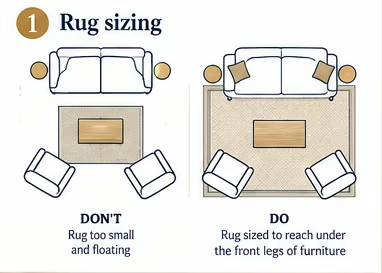
In a dining room, the rule changes slightly: the rug should extend 18 to 24 inches beyond the edges of the table on each side, so chairs stay on the rug even when pulled away from it. If your dining area shares space with a living room, use the sizing rule for each zone separately and leave a gap between the two rugs so the spaces still read as distinct.
How should I hang my pictures?
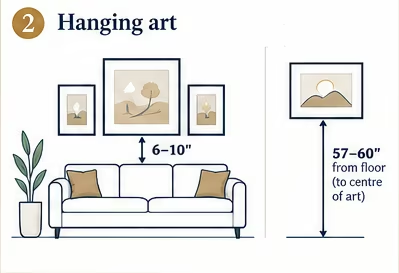
"Test drive" a piece before committing: lean it against the wall or furniture, live with it for a day, and only then hammer a hole. For a grouping, trace each frame onto paper, tape the templates to the wall and rearrange until the spacing looks right, then measure down from the top of each frame to mark exactly where the hook goes.
How do I choose paint colours that work together?
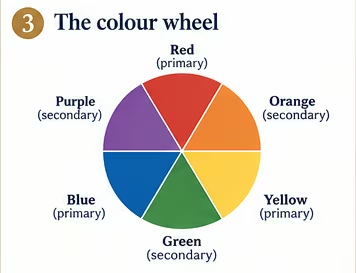
A few working rules: choose slightly muted colours over "true" colours for main walls, since a muddied blue or green-based yellow is easier to live with than the saturated version on the paint chip. Test any candidate colour on the actual walls, in the actual room, at different times of day, before committing. Trim is traditionally lighter than walls, in a semi-gloss or satin finish for durability; ceilings are usually the same white as the trim, or a shade lighter than the walls. Reserve a bolder accent colour for one wall or a smaller space, like a powder room, where the commitment is lower.
What about combining patterns and fabrics?
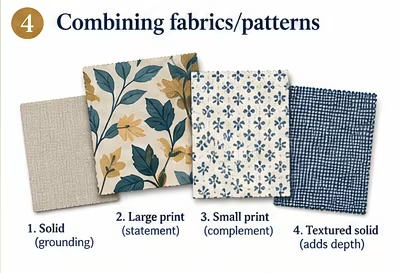
A reliable formula: pick one solid, neutral fabric as the backdrop for your largest pieces (a sofa, curtains or a duvet), then layer in one larger-scale print, one small-scale print and one textured solid as accents on pillows, a chair or a smaller piece of furniture. The large print sets the room's palette; pull a colour or two from it for the smaller print and the textured solid so everything reads as one considered scheme rather than a mix of unrelated pieces.
Window treatments
Where should I hang my drapery rod?
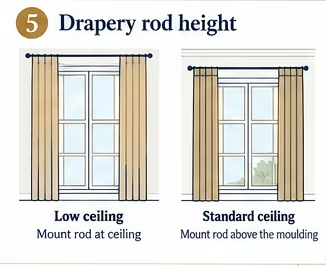
If there are 12 inches or more between the top of the window moulding and the ceiling, hang the rod at the halfway point between the two. If your window mouldings are attractive, don't cover them: hang the rod at the very bottom of the moulding, or just below it, so the trim stays the focal point instead of the drapery.
Drapery, blinds or shutters: what should I actually choose?
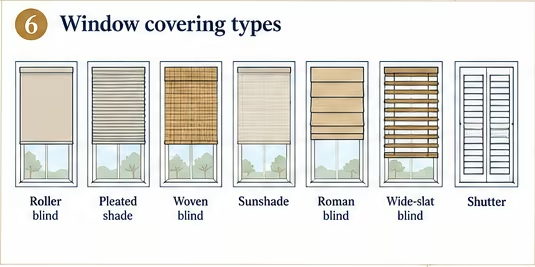
Beyond drapery, the main off-the-shelf options are roller blinds, pleated shades, bamboo or woven blinds, sunshades, fabric roman blinds, wide-slat blinds and shutters, each trading off price, privacy, ease of installation and durability differently. As a general guide: roller blinds are the most affordable and give full privacy; wide-slat blinds and shutters cost more but last longer and give you control over how much light comes through; fabric romans look the most custom but are the priciest off-the-shelf option. Layer drapery over any of them for a more finished, hotel-like look, and choose based on how much privacy the room actually needs: full privacy for a bedroom facing the street, partial for a living room with sheers, and often nothing at all for a room no one overlooks.
Lighting design
Lighting is the most underused decorating tool in most homes. A single ceiling fixture almost never gives a room the layers of light it actually needs.
General, task and mood lighting
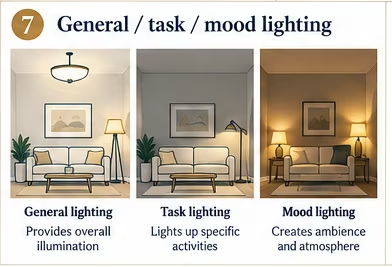
General (ambient) lighting provides even light throughout a room with no harsh shadows or bright contrasts, usually from ceiling fixtures or a combination of lamps. Task lighting adds focused light for a specific activity: a reading lamp, desk lamp or under-cabinet kitchen lighting. Mood lighting, like a dimmed lamp or a picture light, creates atmosphere rather than usable brightness. A well-lit room combines all three rather than relying on the ceiling fixture alone; a dimmer switch on your main lighting is one of the cheapest upgrades that changes how a room feels at night.
How high should my dining room light fixture hang?
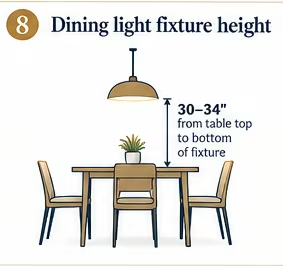
Centre the fixture, and the junction box it hangs from, above the table itself rather than the geometric centre of the room if the two don't line up, since tables often sit to one side where traffic flow is lighter. Add a dimmer so the same fixture can go from bright task lighting for homework to low, warm light for dinner.
Where should I place my lamps?
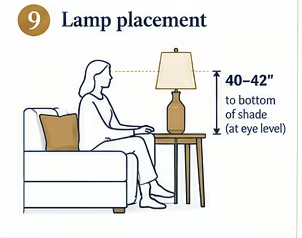
The same eye-level rule applies in the bedroom, measured from the top of the mattress, and in a home office, measured from a seated position at the desk. If a lamp is too tall for the spot, either move it back or size down; a shade that sits too high causes glare, and one that sits too low won't give enough light to actually read by.
Choosing bulbs and fixtures
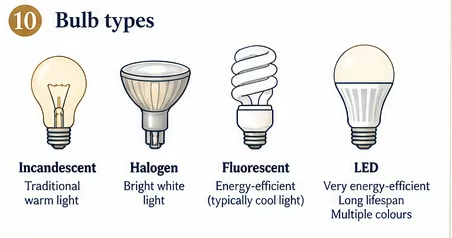
Incandescent bulbs still render colour the most naturally and are the cheapest to buy, but burn out fastest. Halogen bulbs run about twice as bright for the same wattage and last roughly twice as long, with excellent colour rendering, but generate more heat. Fluorescent tubes and compact fluorescents use very little electricity and last for years, in a cooler or warmer white depending on the tube. LED fixtures, which have become the default since these older comparisons were common, combine long life with low running cost and are now the practical choice for most new fixtures. Whatever the bulb type, a dimmer, a baffle (to hide the bulb from view at an angle) and a diffuser (to soften a bare bulb's glare) solve most of the everyday lighting complaints in a room.
Lighting room by room
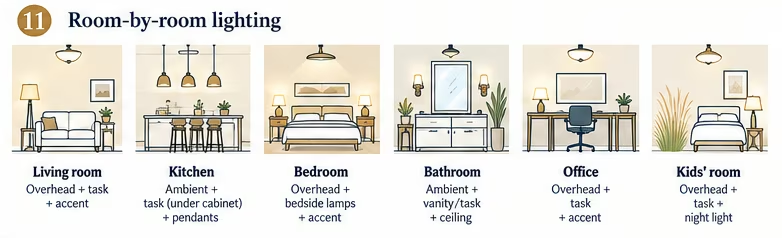
- Living room: layer a pendant or ceiling fixture with table and floor lamps so light pools in more than one spot; a reading lamp beside your usual chair should sit at the eye-level height above, adjustable so it lights the page without glare.
- Kitchen: under-cabinet lighting over the counter and a strong source over the island or sink solve most of the practical need; a dimmer on the main fixture lets the same kitchen go from task-bright to a softer, cosier evening feel.
- Bedroom: a bedside lamp at shoulder height when sitting up in bed is the most common miss; if the bed isn't centred in the room, centre the lamp under the bed instead, or use two smaller lamps rather than one large one that looks off-balance.
- Bathroom: aim for two lamps or sconces at either side of the mirror rather than one fixture straight above it, which casts unflattering shadows across the face.
- Home office or study: a desk lamp with an adjustable arm, positioned to the side opposite your writing hand, avoids shadows and glare on a screen or work surface.
- Children's room: a low-wattage night light plus a ceiling fixture on a dimmer covers both bedtime and daytime play without needing to switch fixtures.
Lighting safety
In bathrooms and other high-humidity areas, use only fixtures rated for damp or wet locations, and have an electrician confirm anything you're unsure about. Never exceed the maximum wattage printed on a fixture's label; an overloaded bulb can overheat and become a fire risk. Keep cords secured and out of reach in homes with small children.
Curb appeal and outdoor living
How can I give my home more curb appeal?
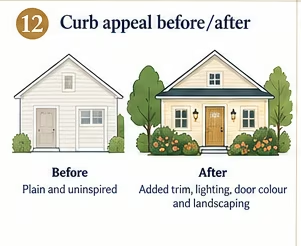
Whether it's a fixer-upper or a builder-standard new home, the exterior responds to the same short list of upgrades: a cohesive paint palette of two or three colours plus a door colour, a solid, well-proportioned front door, trim or mouldings around the windows that give the facade some presence, exterior lighting sized generously enough to actually look intentional at night, and simple landscaping with one clear focal point rather than a scattering of small plantings. A house-number plaque and updated door hardware are inexpensive details that read as "cared for" out of proportion to their cost. For the planting side of curb appeal specifically, see Laura's Curb Appeal & Seasonal Planting Guide.
Choosing garden furniture
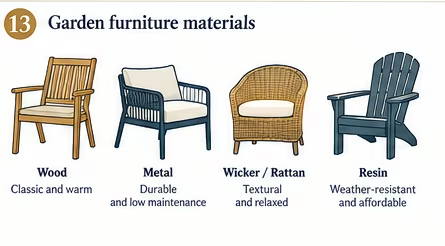
Wood (teak, acacia, cedar or pine) is durable if maintained, with hardwoods needing only an annual oil treatment and softwoods needing yearly exterior stain. Metal furniture is available in styles from modern aluminum to ornate cast or wrought iron; aluminum resists rust and suits a modern deck or balcony, while cast iron is heavier, more traditional and more expensive. Wicker and rattan look ideal for a cottage or lakeside setting but are among the least durable materials outdoors unless it's a high-grade synthetic resin weave, which resists weather far better than natural fibre. Resin and plastic furniture are the most affordable and lowest-maintenance option, suited to a contemporary space or anywhere hardscaped rather than planted.
Outdoor storage options
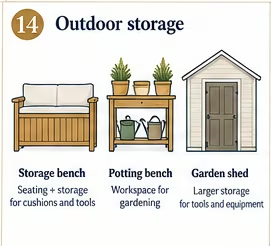
For a small deck or patio, a storage bench that doubles as seating keeps cushions, tools and small items out of sight in one footprint. For more flexibility, a potting bench adds a working surface with shelves and drawers, useful even if you don't garden heavily. On a larger property, a garden shed is the most space-efficient option overall; size it for what you'll actually store through every season, not just the summer months, since underestimating shed size is the most common regret.
What can I do with my front yard besides grass?
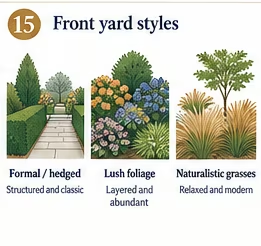
Three reliable directions: a formal garden with clipped hedges and a symmetrical layout, which suits smaller city lots and needs the least ongoing maintenance; a lush, foliage-driven garden of hostas, ferns and other shade plants for a lot with mature trees; or a looser, naturalistic planting of ornamental grasses and bold perennials for a sunny lot, which brings the most colour and movement but needs the most seasonal upkeep. Match the style to how much time you actually want to spend on it, not just how it photographs.
Built-ins and everyday storage
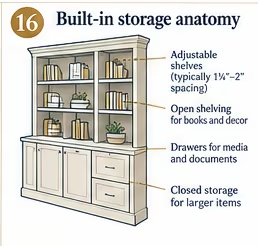
Before building or buying a built-in unit, decide what it actually needs to hold. Bookshelves should be no more than 14 to 16 inches deep, or books get lost at the back; deeper shelves lower in the unit can hold larger items like baskets or bins. Drawers are the most practical way to store media, cords and documents out of sight, since finding hardware for pocket doors is more expensive and more prone to needing repair. If weight isn't a concern, thicker-looking shelf faces (1.5 to 2 inches) read as more substantial and proportional on a large unit, even if the shelf itself is thinner underneath. Match a built-in's moulding to the room's existing trim for a seamless, built-from-the-start look, or deliberately contrast it for a more modern statement.
Decor, design and lighting: common questions
What size should my area rug be?
In a standard living or family room, leave roughly two feet of bare floor around the rug on all sides, and try to get it under all or most of the furniture in the seating area so the room reads as unified rather than the rug floating in the middle. In a dining room, the rug should extend 18 to 24 inches beyond the edges of the table so chairs stay on the rug even when pulled out.
How high should I hang pictures on the wall?
Centre a picture 57 to 60 inches from the floor to the middle of the piece, which matches average eye level. Over a sofa, chair or table, hang art 6 to 10 inches above the furniture so it reads as one grouped unit rather than floating separately.
How high should a dining room light fixture hang above the table?
As a general rule, hang the fixture 30 to 34 inches above the tabletop, or roughly 5 to 5.5 feet from the floor. For fixture size, measure the room's width in feet and multiply by two to get the ideal diameter in inches, or use about one-third the length of the table as an alternate guide.
What is the difference between general, task and mood lighting?
General (ambient) lighting provides uniform light throughout a room with no harsh contrasts. Task lighting adds concentrated light for specific activities like reading or cooking, using lamps or under-cabinet fixtures. Mood lighting, such as picture lights or dimmed lamps, creates atmosphere rather than functional brightness. A well-lit room typically layers all three rather than relying on one ceiling fixture alone.
How can I improve my home's curb appeal before selling?
Focus on a cohesive exterior colour palette (two or three colours plus a door colour), a strong front door, well-maintained lighting fixtures at the door, tidy landscaping with a clear focal point, and a house-number plaque that's easy to see from the street. Small, well-executed details usually outperform one large, unfinished project.
Getting your home ready?
Get a decorating and staging plan that's specific to your home
No obligation. Laura will walk your home and give you a prioritized list of what actually moves the needle, whether you're settling in or getting ready to sell. Laura McBride, REALTOR®, Revel Realty Inc., Brokerage, serving Ajax, Pickering, Whitby and Durham Region.
This guide is general decorating information, not a substitute for a qualified electrician, contractor or interior designer, and is not intended to solicit clients already under contract with a brokerage.